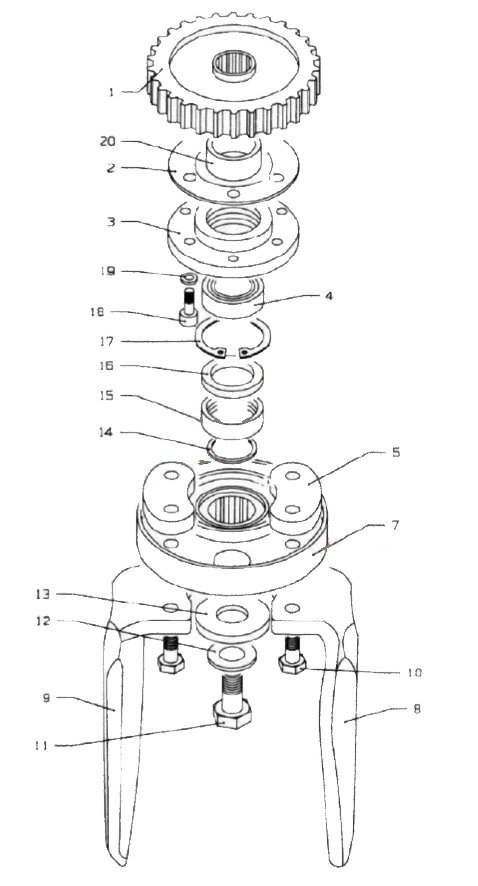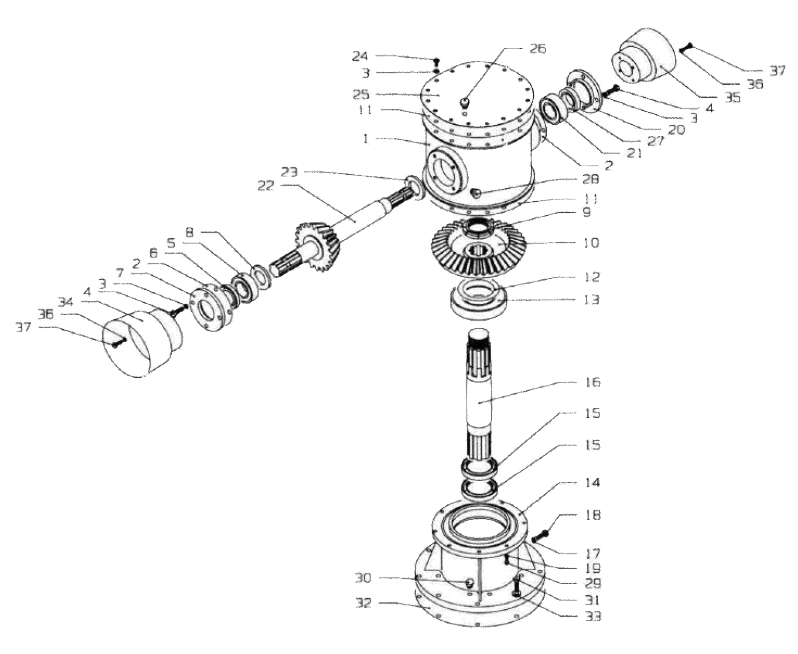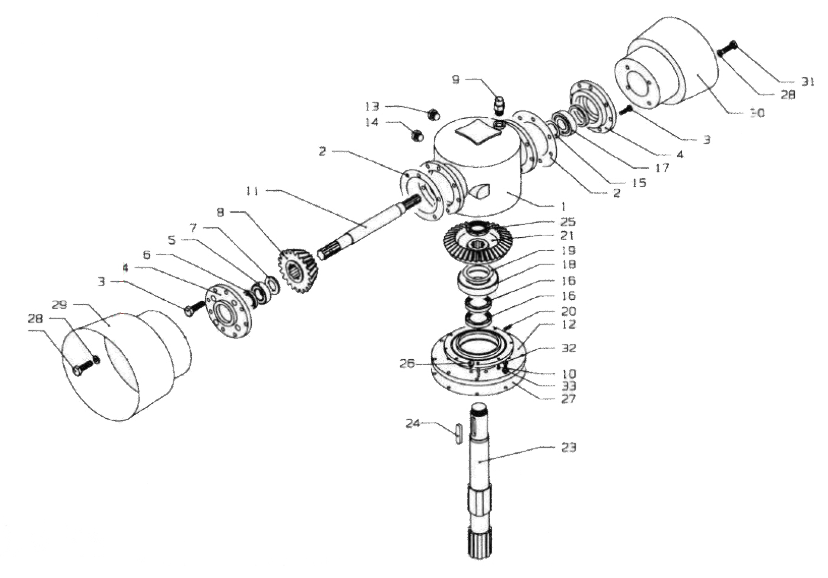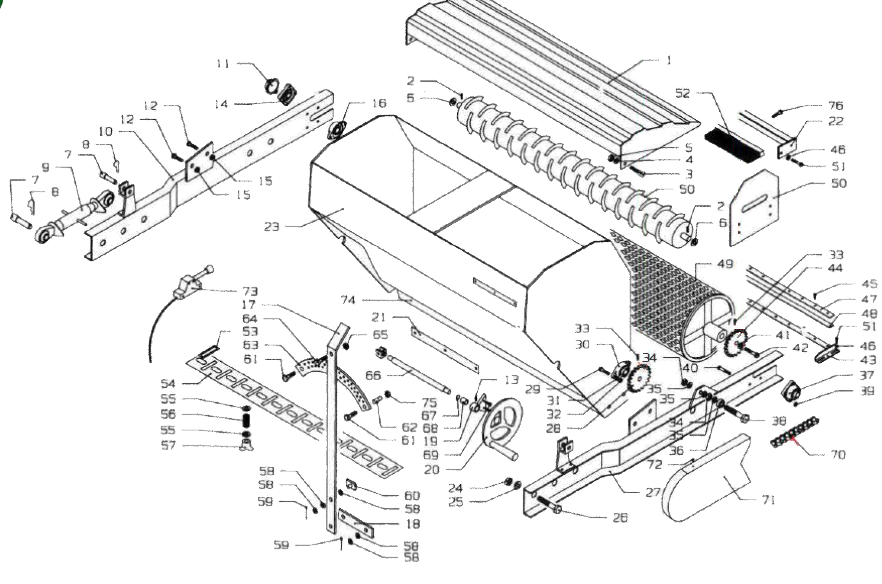
The sowing combination consists of a power harrow with, on top, an installed seed storage tank.
The power harrow is hitched behind the tractor and driven by the PTO.
The seed storage tank/machine is driven by a roller that will start to rotate when the machine starts to move.
A distribution roller is driven in the sowing machine that distributes the seeds over the slots in the seed storage tank. A lever sets the opening of these slots and calibrates the seed flow.
Identification of the machine
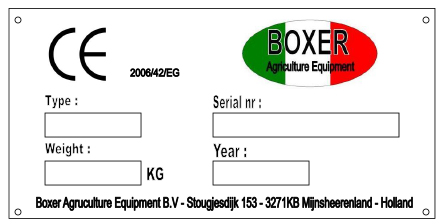
Every machine leaves the factory with a machine nameplate (see the figure below).
The nameplate can be found on the machine's frame.
The following data can be found on the machine nameplate:
Type (specification of the model)
Serial no. (production number)
Weight (total machine weight)
Year (year of manufacture)
This data must always be specified when the machine is to be serviced or when parts are ordered.
Working depth
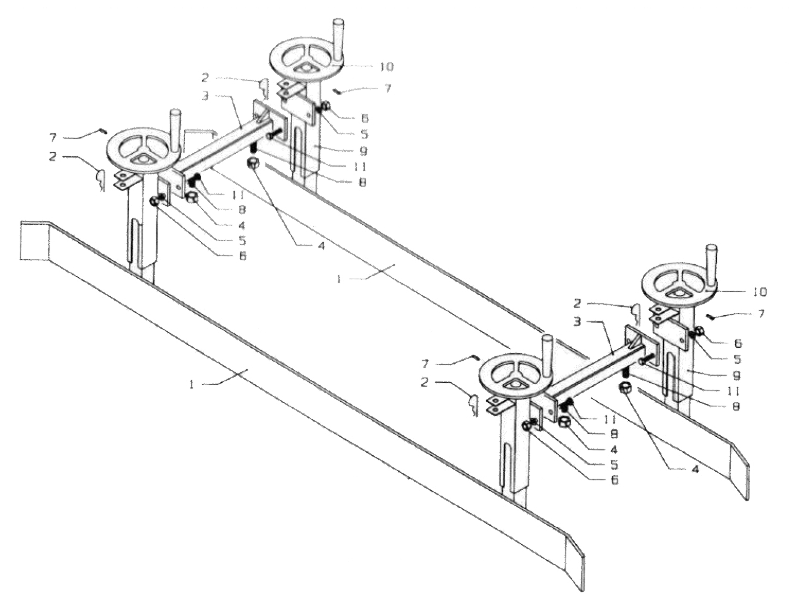
Lift the machine so that the pressure roller is not in contact with the ground. By twisting the threaded spindles, the height of the pressure roller can be set. You can determine the working depth of the machine by doing this.
Guide plate
The guide plate can be set in the vertical direction. Install the plate in such a way that it cuts 5 cm into the ground at most.
Rotor speed
The soil condition, required crumbling and operating speed are the determining factors for the rotor speed that you need to use. The rotor speed is determined by the PTO speed. The speed range for the machine is a minimum/maximum of 540/750 rpm.
By using the table that is affixed on to the sowing machine, you can adjust the estimated seed quantity per m² (see figure A below).
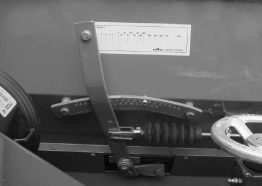
Figure A
Use the lever (see below) to increase or decrease the quantity.
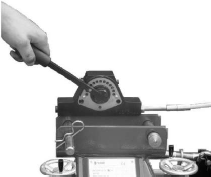
Figure B
In view of the different seed qualities, we recommend performing a sowing test and to subsequently weigh the seed quantity to set the exact quantity.
|
Machine type |
Calculation |
|
ZM 145 |
16.1 |
|
ZM 165 |
18.4 |
|
ZM 180 |
20.7 |
|
ZM 200 |
23.0 |
The calculation of the set number was carried out by using a standard roller.
When the machine is transported, when returning for a further run or when raising during sowing, we recommend closing the slots by using the special lever; simply inserting a pin in a hole in the crescent will make sure that the selected point is remembered (Figure A).
Most frequent faults
|
Fault |
Cause |
Solution/repair |
|
The seed does not fall. |
The screw feed is not rotating. |
Reconnect the machine. |
|
The slots are closed. |
Open the slots using the special lever. |
|
|
The hopper is empty. |
Fill the hopper. |
|
|
A tunnel has been formed at the bottom of the hopper. |
Check whether the seed is too wet, which means that it cannot flow. Try to dry the seeds. |
The sowing machine can be transported in the lifting direction of the tractor.
Good maintenance to the machine is required to ensure it continues to be reliable and safe when used.
Maintenance after use
Lubrication
REGULAR MAINTENANCE
Regular maintenance must be carried out at the following times:
Lubrication points
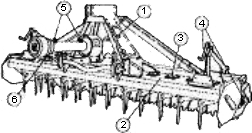
Top up the gearbox oil
Top up the oil of a new machine (or after installing a new gearbox) for the first time after fifty (50) hours and then every four hundred (400) hours or once a year.
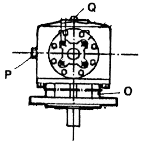
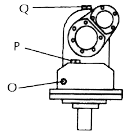
Only top up with the following oil:
Q8 T55-85 W
The main frame is filled with:
Q8 GOYA 460 OIL